
Rebirth: Climate Crisis and Migration – Understanding the Connection Between Climate Crisis, War, and Migration
Frissítve: aug. 6.
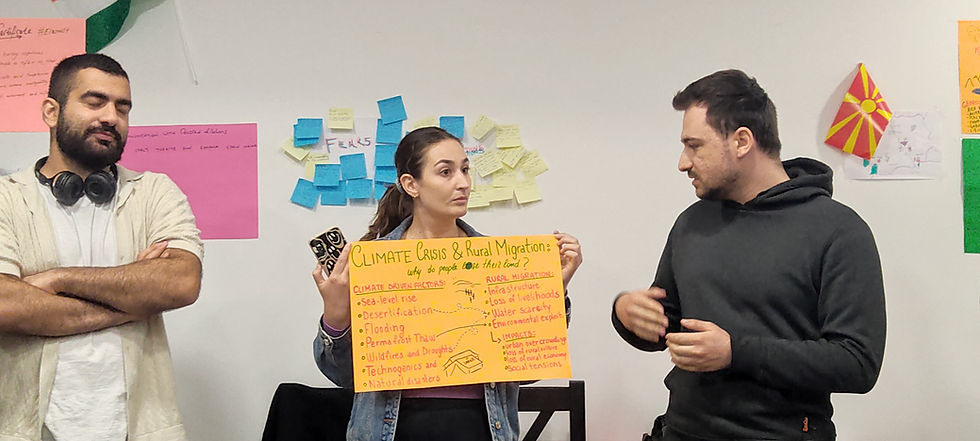

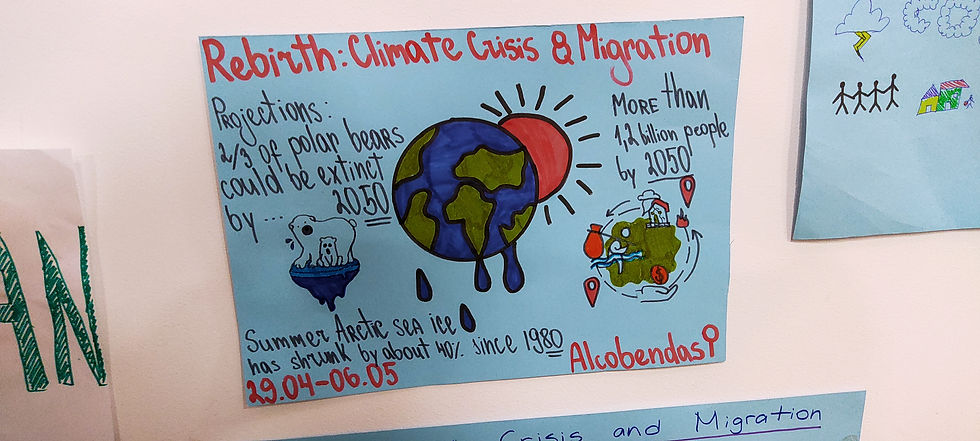
The Erasmus+ Mobility of Youth Workers project “Rebirth: Climate Crisis and Migration” was implemented in Madrid/Alcobendas, Spain. Throughout the programme, participants took part in activities designed to strengthen their connection with nature and increase their environmental awareness. Through music- and movement-based exercises inspired by natural rhythms, youth workers explored creative ways of expressing emotions, ideas, and perceptions related to the environment. These activities encouraged active participation, improved communication among participants, and highlighted the importance of reconnecting with nature as a source of inspiration and well-being.
The project also included learning activities aimed at assessing participants’ existing knowledge and perspectives regarding climate change, environmental degradation, and migration. By reflecting on their own experiences and exchanging ideas with peers from different countries, youth workers developed critical thinking skills and gained a deeper understanding of the challenges surrounding these global issues. The process created an inclusive learning environment where participants could openly discuss their views and learn from one another.
A significant part of the programme focused on examining the environmental consequences of war and conflict. Discussions addressed issues such as deforestation, loss of natural resources, damage to agricultural land, and the emergence of climate-related displacement and migration. Supported by visual materials and real-life examples, these sessions enabled participants to better understand how environmental destruction and human mobility are interconnected. As a result, youth workers strengthened their ability to analyze complex global challenges from a broader and more holistic perspective.
The project also emphasized dissemination, digital skills development, and intercultural learning. Participants collaborated in international teams to create awareness-raising materials related to climate change and migration while improving their competencies in digital content creation, social media communication, and visual storytelling. Cultural sharing activities provided opportunities to present traditions, languages, customs, and cultural values from different countries, fostering mutual understanding and respect. Through these experiences, participants enhanced their digital competences, intercultural awareness, and capacity to promote environmental and social responsibility within their local communities.


