
Rebirth: Climate Crisis and Migration – Exploring the Environmental Consequences of War and Sustainable Futures
Frissítve: aug. 6.

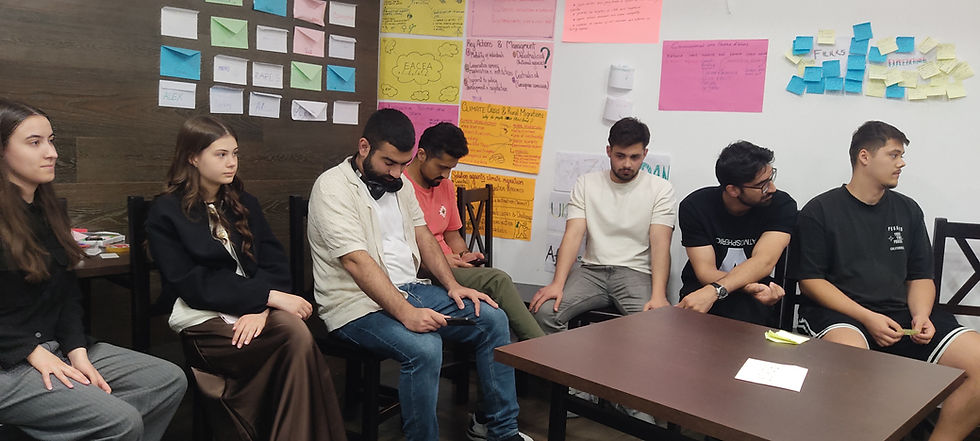


The Erasmus+ Mobility of Youth Workers project “Rebirth: Climate Crisis and Migration” was held in Madrid/Alcobendas, Spain, from 29 April to 5 May 2025, under the coordination of KUFF Refugees and Minorities Solidarity Association. The programme included a variety of non-formal learning activities designed to strengthen participants’ environmental awareness and emotional connection with nature. Through music-based and body-expression exercises inspired by classical compositions, youth workers explored creative ways of interpreting natural phenomena, emotions, and environmental messages. These activities encouraged self-expression, enhanced group cohesion, and helped participants develop a deeper appreciation of the relationship between human well-being and the natural world.
A major focus of the learning process was understanding how wars affect environmental sustainability and access to natural resources. Participants examined the consequences of armed conflicts on water resources, including the contamination of drinking water, damage to treatment facilities, and the long-term environmental risks faced by affected communities. By analysing real-life examples and exchanging perspectives from their own countries, youth workers gained a broader understanding of how environmental degradation contributes to humanitarian crises and forced migration.
The project also encouraged participants to think critically about alternative futures through creative and research-based activities. Working in international teams, youth workers explored how technology, education, health, agriculture, and economic development might have evolved differently in the absence of wars. By transforming their research into stories, scenarios, and performances, participants strengthened their analytical thinking, creativity, teamwork, and problem-solving skills while reflecting on the long-term environmental and social impacts of conflict.
Another important aspect of the programme focused on community engagement, recycling practices, and intercultural exchange. Participants collaborated with local people in creative recycling workshops, transforming collected materials into artistic works while promoting environmental responsibility and sustainable lifestyles. Cultural sharing activities provided opportunities to present traditions, languages, dances, and local customs from different countries, fostering mutual understanding and respect. Through continuous reflection and evaluation sessions, participants assessed their learning outcomes and identified new ways to apply their knowledge in future youth work initiatives addressing climate change, sustainability, and migration.


